
Safe and Sustainable by Design
What is SSbD
Introduction
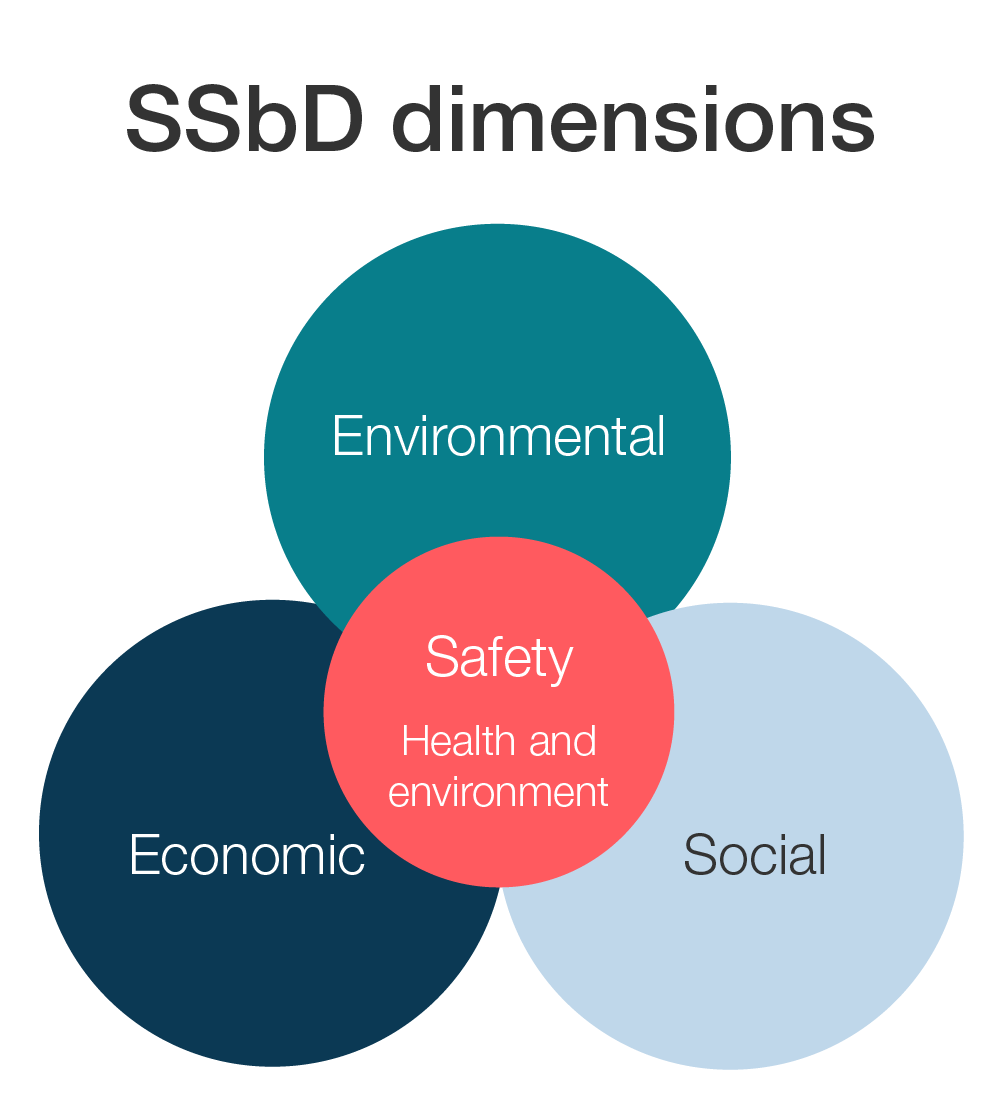
In line with the objectives of the European Green Deal, SSbD is a systemic approach to integrate safety, sustainability and functionality of products and processes throughout their life cycle, from design to end-of-life, with a view to reuse and recycling (circularity).
It is proposed as an approach to R&I and product development that brings economic, environmental and social value for the benefit of society and business, supporting the ambitious goals of the strategy, including zero pollution for a toxic-free environment.
Timeline of relevant concepts for the SSbD
1967Safety of chemicals
EU legislation "Dangerous Substances Directive" (DSD)1972Sustainability
Club's of Rome report "Limits to Growth"1987Sustainability
Publication of "Our Common Future", also known as the "Brundtland Report"1998Green Chemistry
12 Principles2003Green Engineering
12 Principles2015Sustainable Development Goals (SDGs)
Adopted by all United Nations Member States2022"Safe and Sustainable by Design"
Annunciation of SSbD framework
Expected operational benefits include, in addition to safety and sustainability, a better cost-effectiveness of the innovation process and greater compliance with current and future regulatory requirements (and thus shorter time-to-market).
SSbD requires continuous and careful analysis of all stages of product development.
The requirements of safety, circularity and sustainability must be considered from the earliest design stages, evaluating possible material development and engineering options. The description and preliminary assessment of potential impacts must be introduced already at the prototype level, in order to guide product development towards their minimisation. Sustainability, safety and performance of manufactured products must be evaluated according to recognised criteria, and the results used to optimise production, use and end-of-life phases.
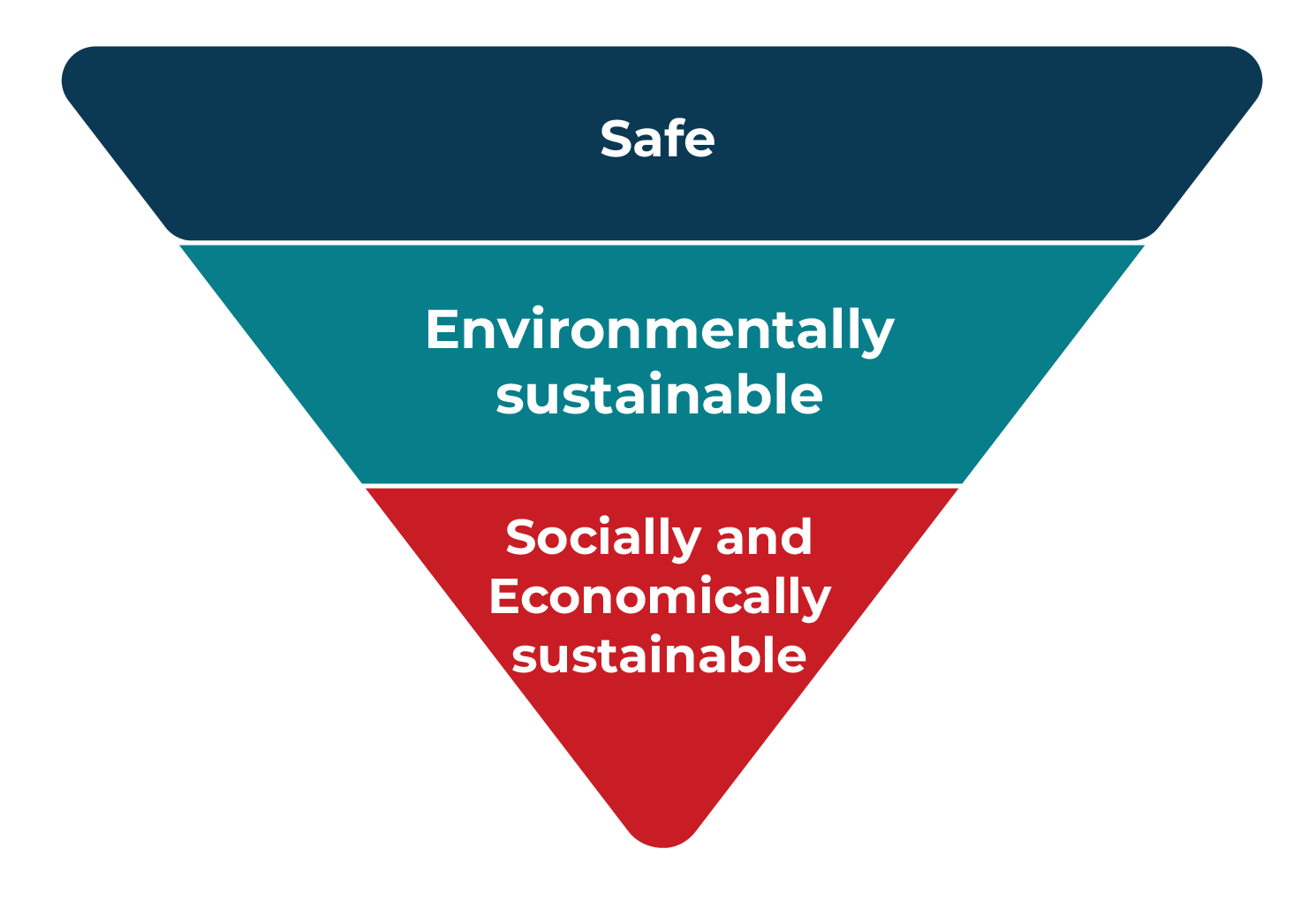
Hierarchical principles underpinning the SSbD framework suggested.
Timeline of the SSbD framework
May - June 2023Feedback collection
Winter 2023Workshop on collected feedback
Spring 2024Guidance report v1
May - August 2024Feedback collection
Autumn 2024Workshop on collected feedback
Winter 2024Guidance report v2
End of 2025Revision of framework
January 2026SSbD stakeholder workshop
February 2026Guidance report version 2
Platforms for SSbD: check them out

IRISS
The International SSbD Network
IRISS is the international ecosystem for accelerating the transition to Safe-and-Sustainable-by-Design (SSbD) materials, products, and processes. Its purpose is to connect, synergize, and transform the SSbD community in Europe and globally towards a lifecycle approach, where safety, climate neutrality, circularity, and functionality are integrated from the earliest stages of design and production. A core element of IRISS is the active involvement of industry, engaging diverse value chains such as automotive, construction, electronics, energy, fragrance, packaging, and textiles. By connecting science, industry, and policy, IRISS provides a platform for knowledge exchange and co-creation to drive sustainable transformation.

PARC
Knowledge sharing portal
The EU PARC (Partnership for the Assessment of Risks from Chemicals) Knowledge Sharing Portal provides a central portal for accessing information, gaining knowledge, and finding support to implement SSbD. Visitors can find important information and explore links to training and educational materials provided to build capacities and develop skills. The portal provides access to the PARC SSbD toolbox, a useful guide to implement the SSbD framework, as well as a direct connection to the SSbD user community at PARCopedia.